Exceptional Things About Daily Life in Korea
I spent a week in Korea — Seoul, then Busan, then back to Seoul. What I keep thinking about isn’t the food or the skyline. It’s a handful of small things that made daily life noticeably easier, most of which cost almost nothing to do.
Here are the ones I photographed — and, at the end, one I’m not sure works at all.
The wall tells you which way the train is going
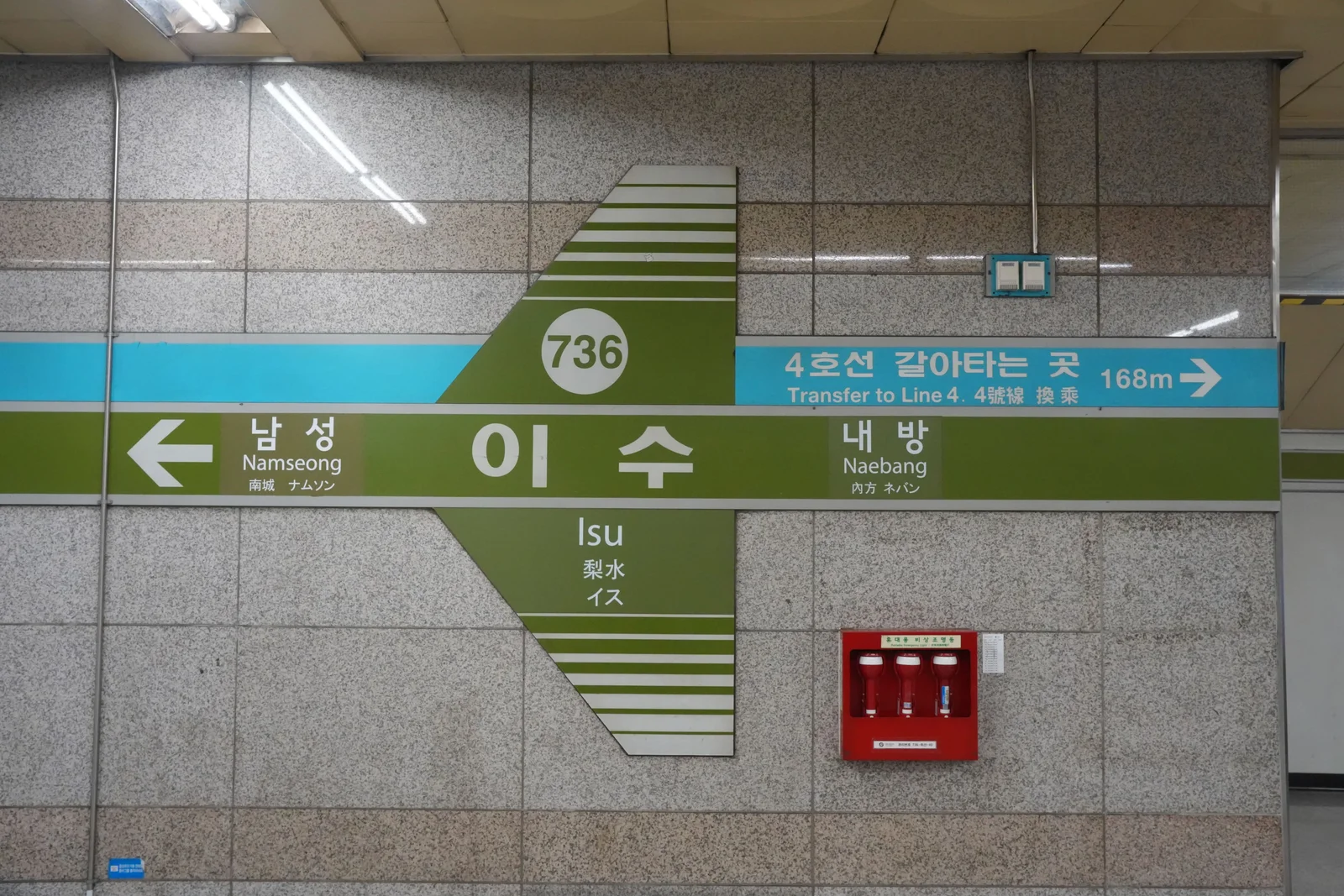
Standing on the platform, the wall tells you where you are, what the next stop is in either direction, and which way you’re facing. The whole green panel is shaped like an arrow, with speed stripes along the edge, so you know the direction before you’ve read a word.
I’ve spent a lot of time on platforms squinting at a map trying to figure out if I want northbound or southbound. Here you just look up.
And exactly how far the transfer is
Look at the blue band in that same photo: Transfer to Line 4 — 168m.
Not “transfer available.” Not an arrow pointing down a corridor. One hundred and sixty-eight meters. Somebody measured it and put the number on the wall, because that’s the difference between a quick hop and a haul with a suitcase.
You can see exactly where your train is
Most systems give you a countdown — three minutes, six minutes — and you take it on faith. Here the platform screen draws the line itself and puts the trains on it.
In this one, the strip along the bottom shows the four stations before mine. One train is sitting at Sinseoldong, bound for Cheonan. Another is at Dongdaemun, bound for Incheon, two stops out and closing. Each one is labeled with its destination and its actual train number, and little arrows show which way they’re moving.
It’s the difference between being told how long to wait and being shown why. I found I stopped checking the clock entirely.
The same signs overhead and underfoot
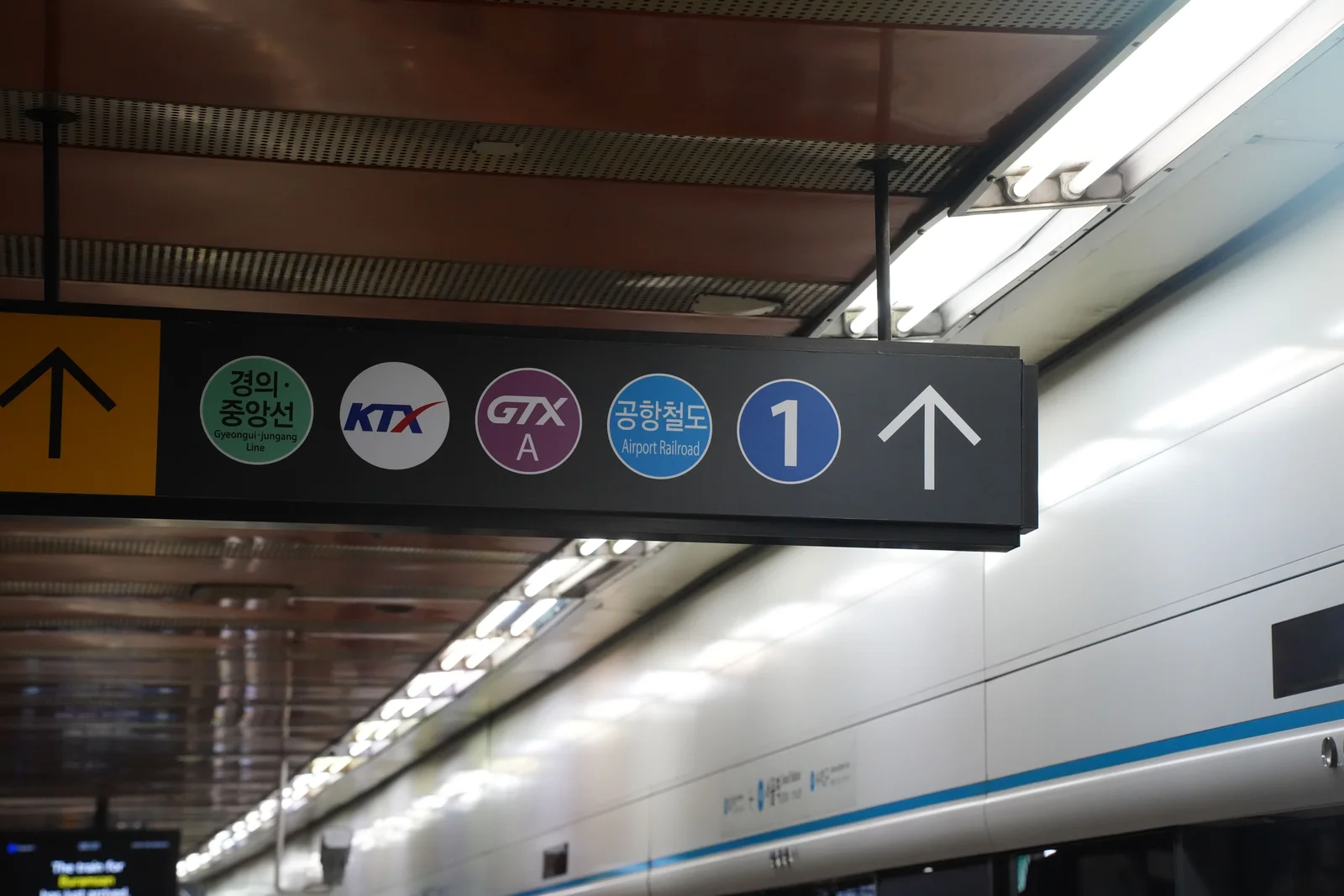
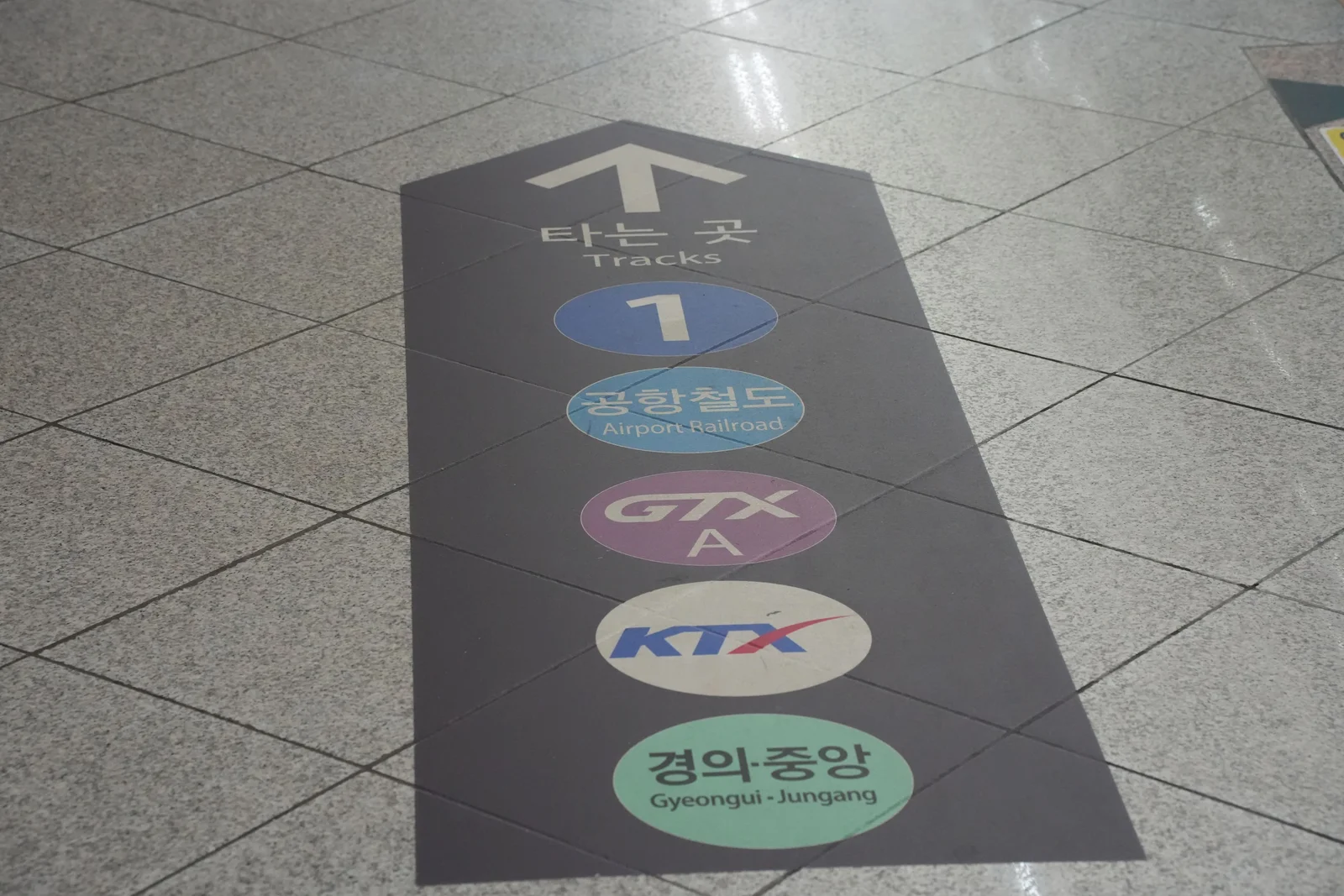
The line markers hang from the ceiling on a black bar. The same five markers, the same colors, are also printed on the floor.
It looked like overkill until I walked through at rush hour, when the ceiling was blocked by a wall of people and I was looking down anyway. The information is doubled because you might be looking up, or you might be looking at your shoes.
Lights built into the street itself
Same idea above ground. At crosswalks, the signal lights are set into the corner and along the crossing — down at foot level, where people are actually looking.
A seat you can spot from across the car
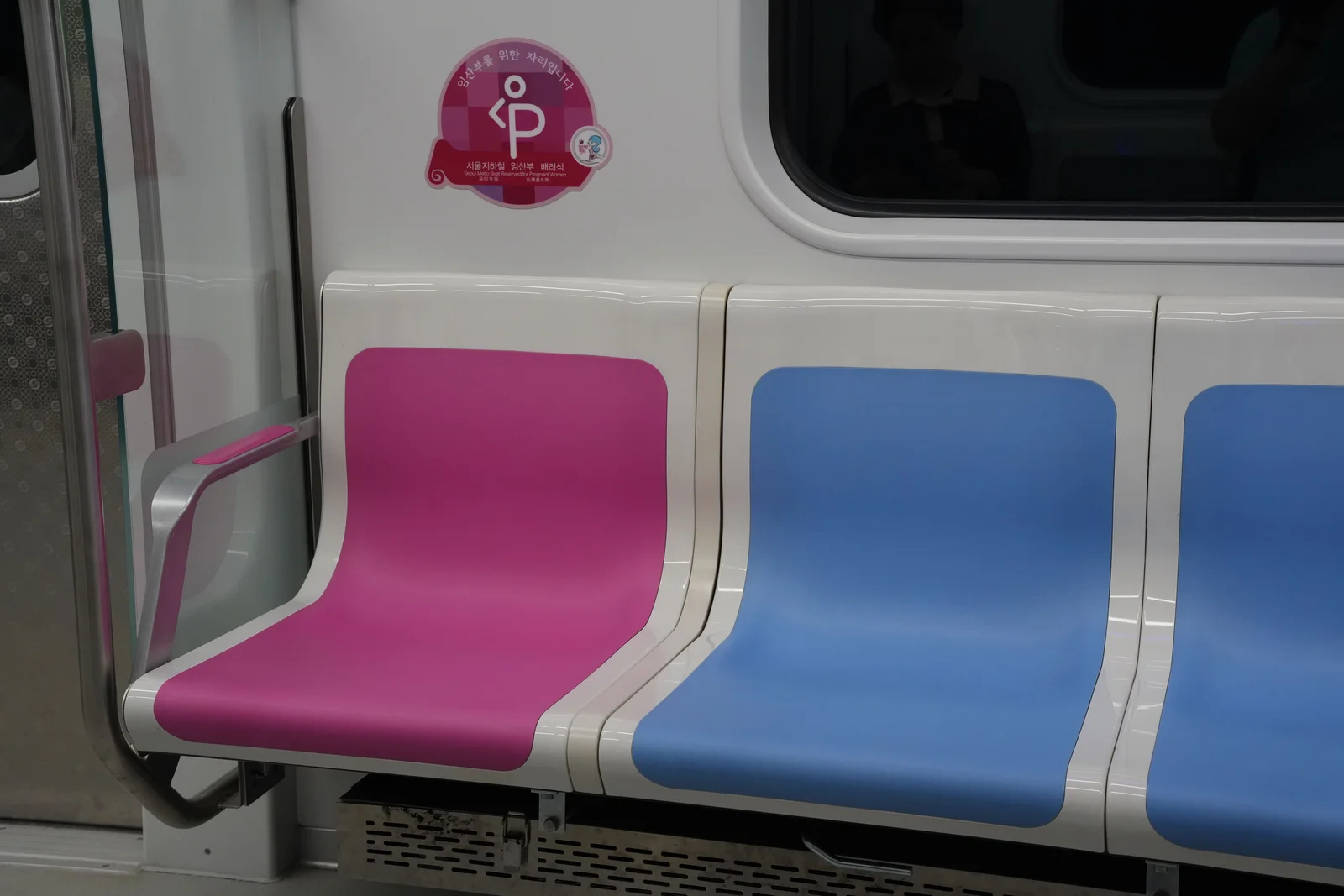
Every car has a seat reserved for pregnant riders. Plenty of cities do that. What’s different is that they didn’t stop at the decal — they made the seat itself pink.
A sign you have to be close enough to read. A pink seat in a row of blue ones you can see from the far end of the car, in a crowd, in a language you don’t speak. Nobody has to read anything or ask anyone anything.
Calories, to two decimal places
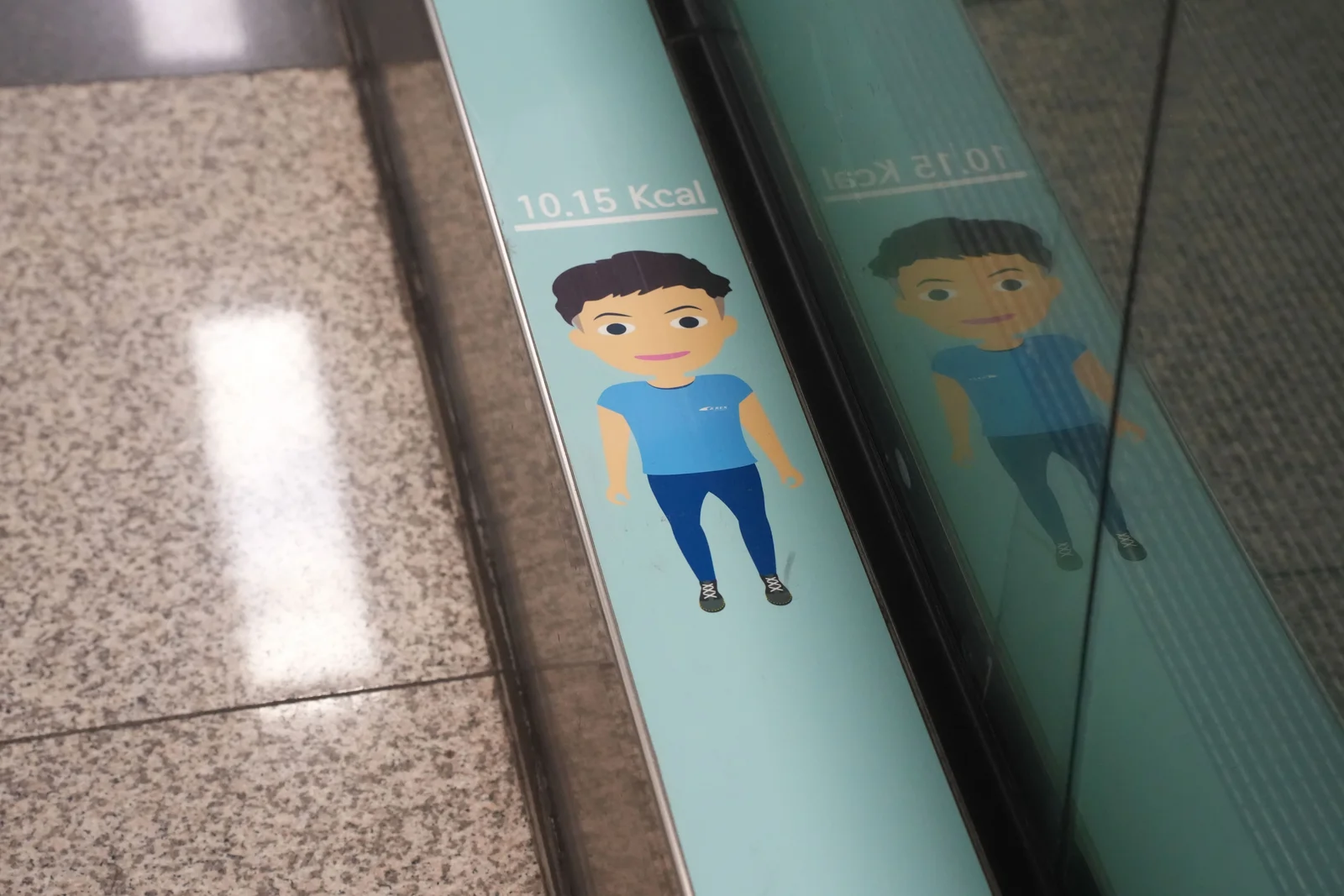
Where you choose between walking and riding the moving walkway, there’s a cartoon figure and a number: 10.15 Kcal.
No lecture, no “stay active” — just what you’d burn if you walked, worked out to two decimal places. I walked it.
A highway overpass they turned into a garden
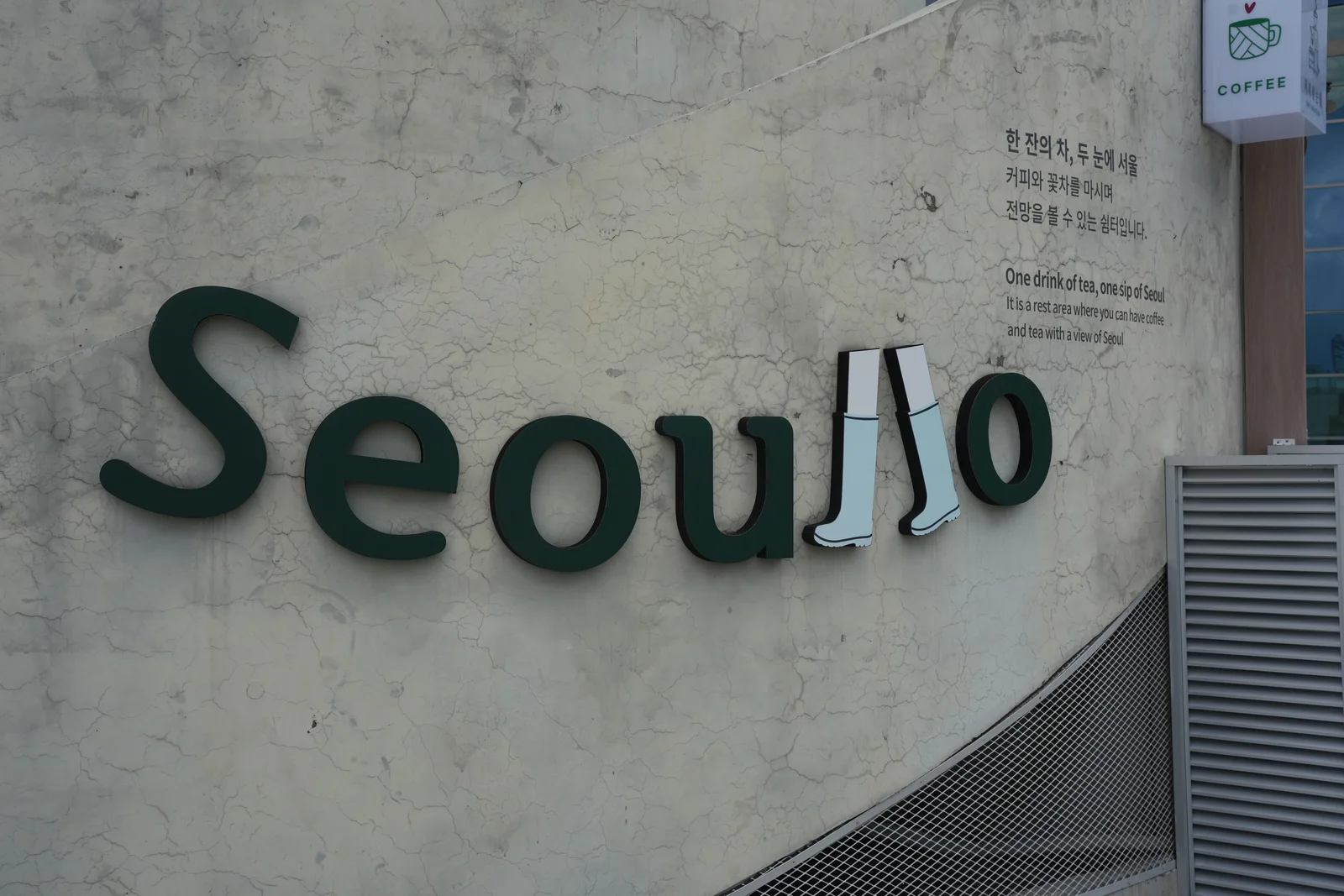
This is Seoullo 7017, and the number is the whole story: built as a road overpass in 1970, reopened as a walkway in 2017. It also links 17 paths into the surrounding neighborhoods.
The road ran beside Seoul Station and stopped carrying cars. Rather than knock it down, Seoul filled it with about 24,000 plants in concrete pots and let people walk it — roughly a kilometer of it, designed by the Dutch firm MVRDV and opened in May 2017.
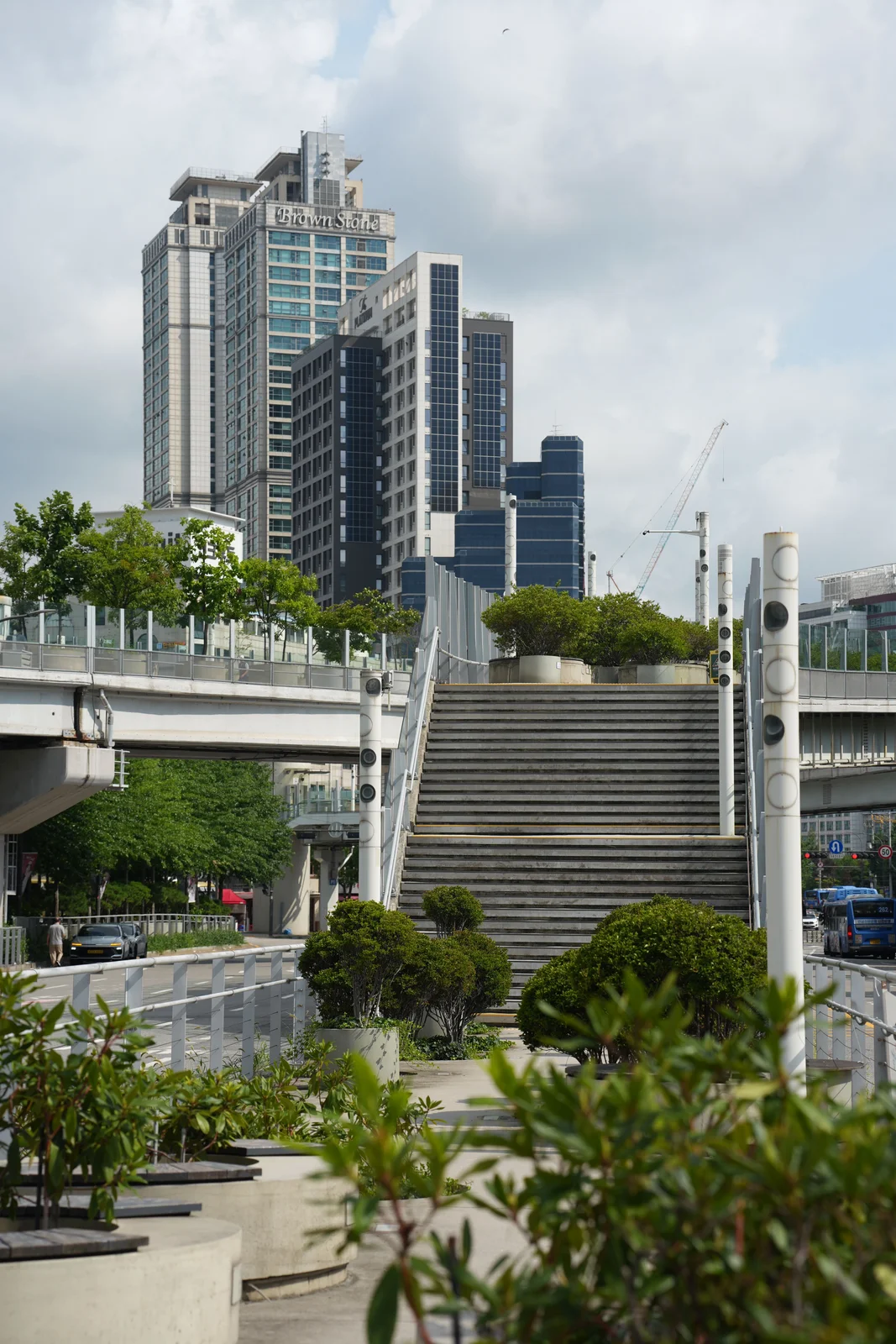
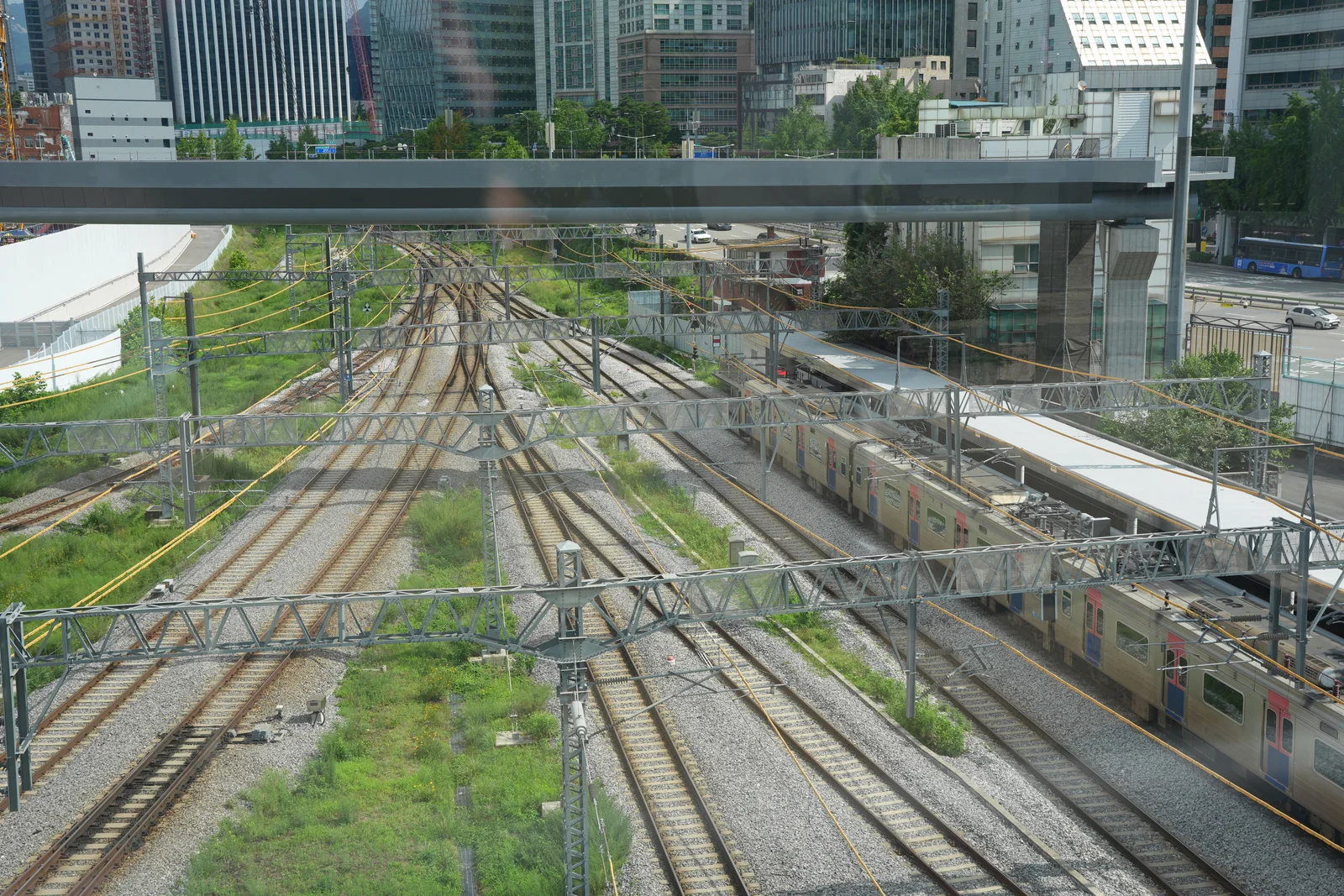
The second picture is the point. What’s underneath is the Seoul Station rail yard — a dozen tracks fanning out, catenary wire, gravel. Nobody was ever going to make that beautiful at ground level. But thirty feet up, it becomes something you stroll across with a coffee.
The details are what got me. A concrete drum painted hot pink inside, labeled Rose Stage, with an upright piano and two stools — and somebody was playing it. A little way on, a circular pond of water lilies with pads the size of dinner plates, sunk into a wooden deck.
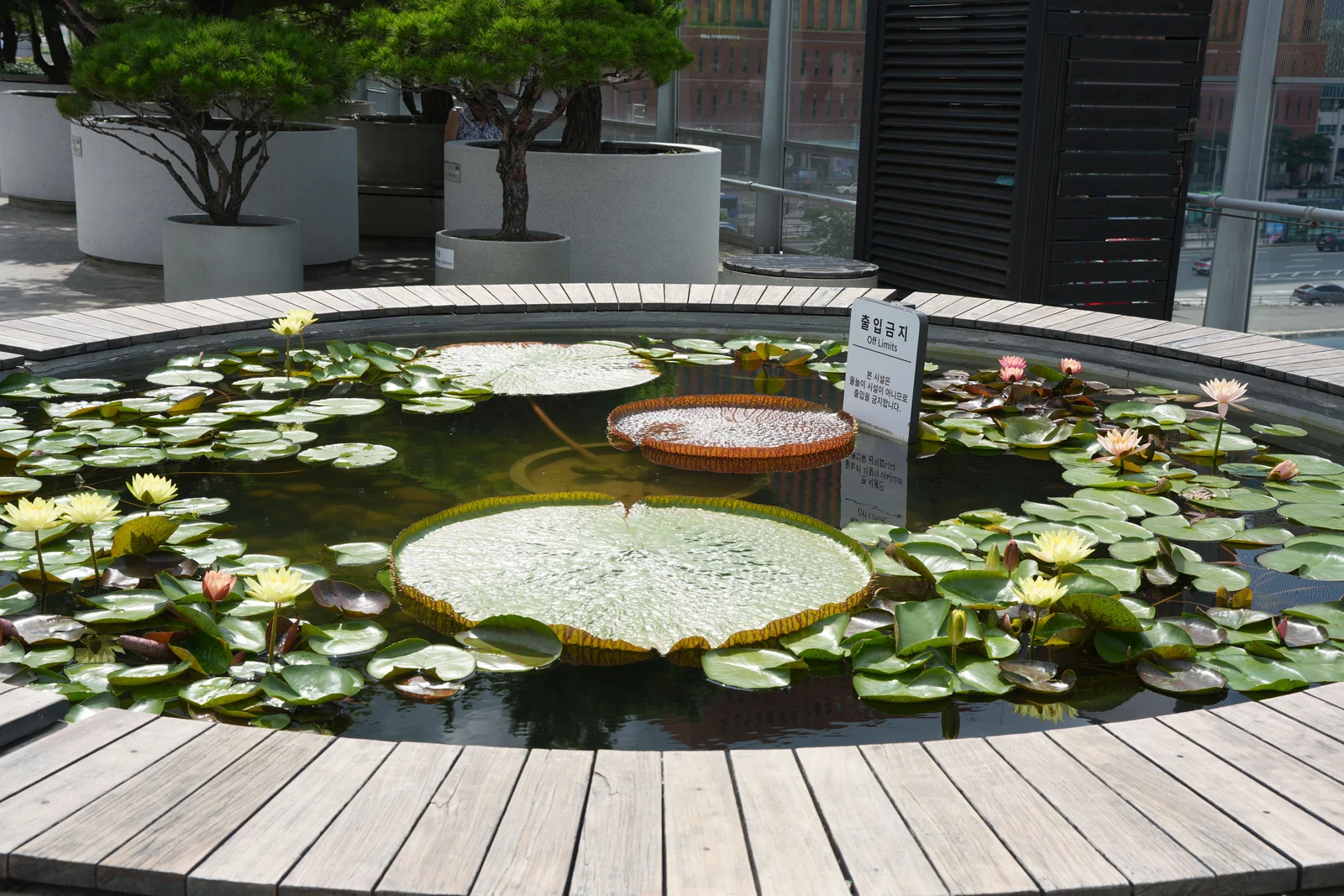
If this sounds familiar, it should — New York did the same trick with a disused elevated rail line and called it the High Line. Seoul’s version is shorter and less famous, and it’s doing the same quiet work: taking a piece of dead infrastructure that a city had written off and giving it back to people on foot.
Worth a read on both: Seoullo 7017 · MVRDV’s project page · the High Line
And one that cost a quarter of a million dollars
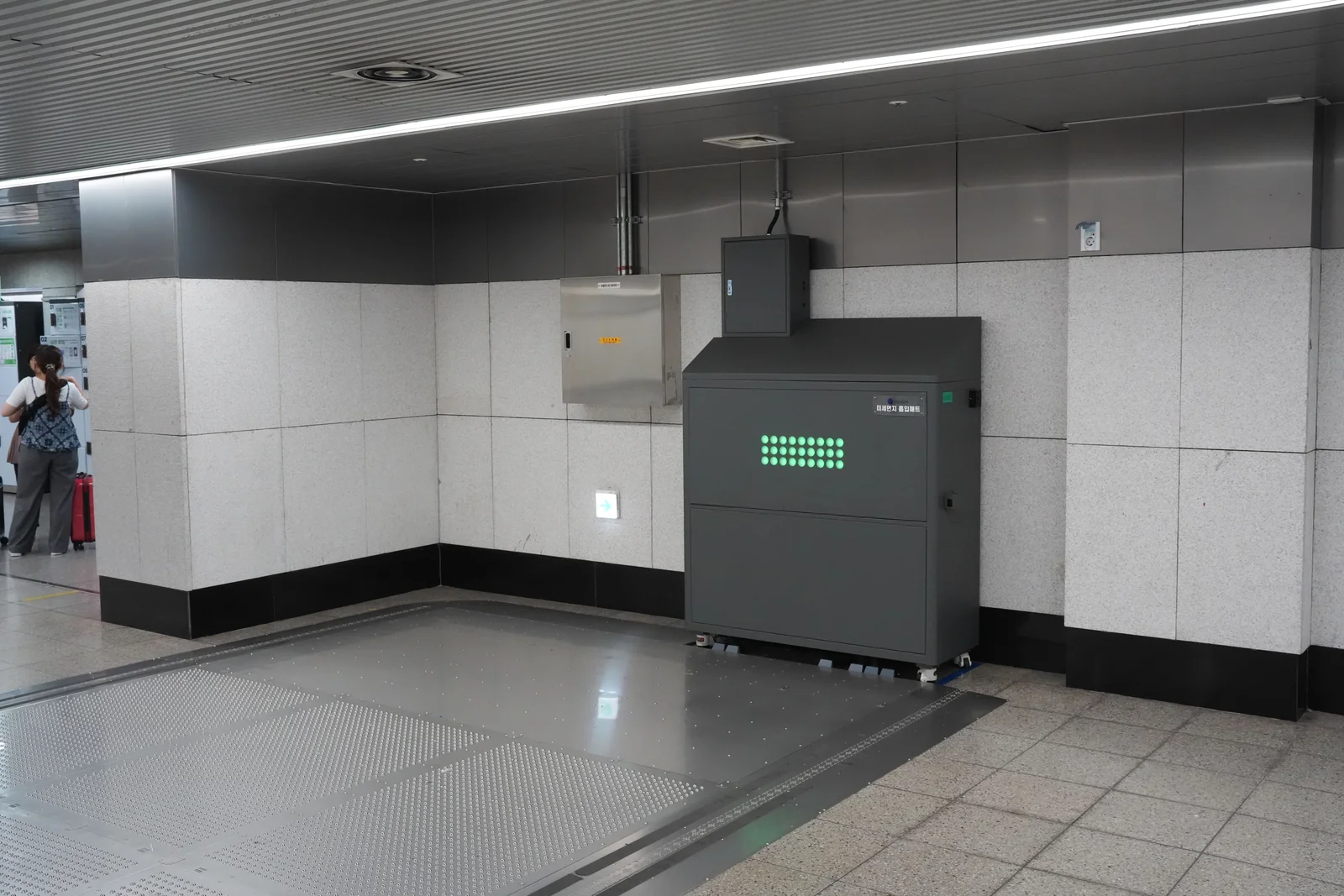
I photographed this because the green lights caught my eye, and I had no idea what it was. The label says 미세먼지 흡입매트 — “fine dust suction mat.”
The machine isn’t the device. The floor is. That metal plate set into the ground by the fare gates is studded with steel ball bearings, runs seven to ten meters long, and vacuums the dust off your shoes as you walk over it, so it never reaches the platform or the trains. The cabinet is just the suction unit. I walked across it without noticing.
Which is where this one stops fitting the pattern. Everything else here was nearly free. These cost about 360 million won a station — roughly a quarter of a million dollars. Seoul spent 3.6 billion won putting them in ten stations in 2024.
And Koreans are arguing about them. A pilot measured “5% or more” reduction in fine dust at platform level, which critics call marginal for the price. Korean papers have run them in a series on wasted tax money. The line that stuck with me came from an environmental engineering professor: people breathe at about 1.2 meters, not at floor level. Riders say they’re loud and slick when wet.
I have no standing to settle that. But it’s the one thing I saw all week where somebody clearly spent a great deal of money being seen to solve a problem.
Most of this required no new technology at all. A number painted on a wall. A seat molded in a different color. The same five circles printed twice. A cartoon and a decimal.
Two of them weren’t cheap, though. The overpass cost real money, and so did the mat. So it isn’t really about budget.
What the good ones have in common is that somebody started from a person standing in a particular spot — on that platform, in that car, on that dead stretch of road — and asked what would actually help. The mat started somewhere else, from a problem on a chart, and you can feel the difference standing on it.
The rest of them worked so well that nobody ever had to defend them.